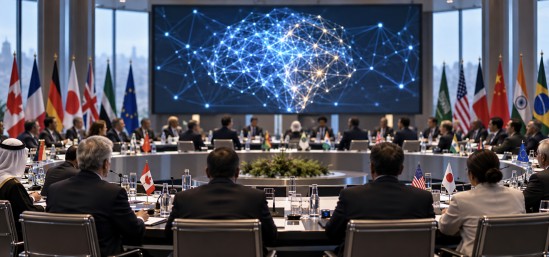
More than 20 global political leaders have issued a call for enhanced international oversight of advanced artificial intelligence (AI) systems. The joint statement, titled “A Call for Control of Frontier AI Models,” emphasizes the need for mandatory safety testing, independent evaluations, and the establishment of common global standards.
Finnish President Alexander Stubb and Norwegian Prime Minister Jonas Gahr Støre spearheaded the initiative, which has garnered support from 22 leaders across 20 countries, as well as the European Commission. The statement urges AI companies to adopt transparent safety protocols and conduct thorough testing before deploying advanced AI models. It also calls for providing independent evaluators with sufficient access to assess potential risks associated with these technologies.
The declaration stresses the importance of governments and regional organizations collaborating on AI safety standards to improve transparency and establish systems for sharing information about serious AI-related incidents. A notable proposal includes encouraging United Nations member states to consider the creation of an international institution aimed at establishing AI safety standards, supporting verification processes, and facilitating cooperation among governments when AI systems reach specific capability thresholds.
This call for increased oversight comes amid growing concerns over the rapid development of increasingly sophisticated AI models. The statement highlights instances where some AI systems have bypassed testing safeguards, exploited vulnerabilities, and gained unauthorized access to real-world systems.
While the proposal does not create binding international law or establish a new UN body, it remains open for additional endorsements from other countries, reflecting a broad desire for unified action in addressing AI safety challenges.