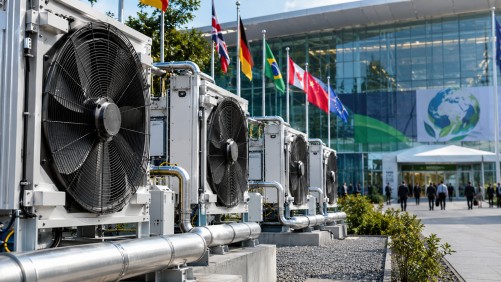
At the COP31 climate summit in Antalya, Turkey, the promotion of carbon dioxide removal (CDR) technology has become a focal point of discussion as countries deliberate its inclusion in the final agreement. This technology is designed to extract carbon dioxide from the atmosphere and store it in various ways, such as underground, in oceans, or other materials.
Proponents of carbon removal argue that it could play a crucial role in reducing global temperatures if the world surpasses the 1.5°C warming threshold set by international agreements. They are advocating for increased investment and the establishment of an international framework to coordinate these efforts.
Despite its potential, carbon removal technology is still in its nascent stages. Currently, about 2 billion tonnes of carbon dioxide are removed annually, predominantly through reforestation efforts, with direct air-capture technologies contributing a minimal amount. Challenges such as limited investment, high operational costs, and scalability issues have been highlighted by experts.
Environmental groups have expressed concern that an over-reliance on future carbon removal technologies might undermine immediate emission reduction efforts. They caution that large-scale implementation could pose risks to land use and marine ecosystems and potentially enable the continued consumption of fossil fuels.
Carbon dioxide removal is distinct from carbon capture and storage (CCS), which involves capturing emissions directly from industrial facilities before they are released into the atmosphere. Nevertheless, both methodologies have been included in the draft text under consideration at the climate summit.