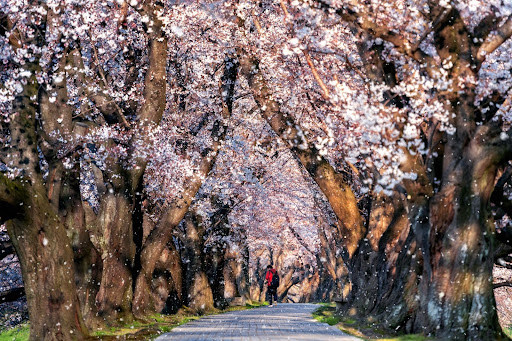
A new wave of blossom tourism is transforming travel patterns across India, with growing numbers of flower enthusiasts choosing Himalayan hill towns and northeastern destinations over the traditional pilgrimage to Japan. India’s cherry, plum, peach, and apricot blossom landscapes offer experiences that are geographically accessible, culturally rich, and visually extraordinary. For travelers who have always wanted to witness the magic of falling petals against a blue sky, the journey may begin far closer to home than they thought.
The Kullu Valley in Himachal Pradesh has become a quiet favorite among India’s most discerning blossom travelers, drawn to the village of Dobhi where fruit orchards deliver a sequence of spectacular blooms each spring. Local residents and visiting travel enthusiasts describe the moment when white plum blossoms appear on bare winter trees as one of the most emotionally powerful natural events they have witnessed anywhere in the world. The bloom lasts only days, but those days are unforgettable.
Kasar Devi in Almora, Uttarakhand offers a blossom experience that combines natural beauty with Himalayan grandeur in a setting that remains relatively undiscovered by mainstream tourism. Himalayan cherry and peach blossoms bloom from late February into March, accompanied by red rhododendrons that add vivid color contrast to the landscape. Visitors to local guesthouses during this period often describe moments of unexpected intimacy with the natural world — petals drifting onto faces and hands as they sit quietly in gardens or on terraces overlooking the hills.
Srinagar in Jammu and Kashmir is arguably the most visually dramatic of India’s blossom destinations, where the combination of world-famous Mughal gardens and the stunning backdrop of the Kashmir Valley creates a setting of extraordinary beauty. Cherry blossoms appear in late March to early April, transforming historic gardens into living paintings of soft pink and white. Locals carry seasonal traditions connected to the blooms, including family walks along Dal Lake where the cultural ritual of catching falling petals has been maintained for generations.
Ladakh’s apricot blossom landscape in April and May and Shillong’s autumn cherry blossoms in November complete the picture of India as a genuinely year-round blossom destination. Photographers in particular prize Ladakh’s Nubra Valley for the visual drama of pink and white blossoms set against stark high-altitude landscapes, while Shillong’s festival atmosphere and unique autumn timing make it a destination unlike any other in the country.