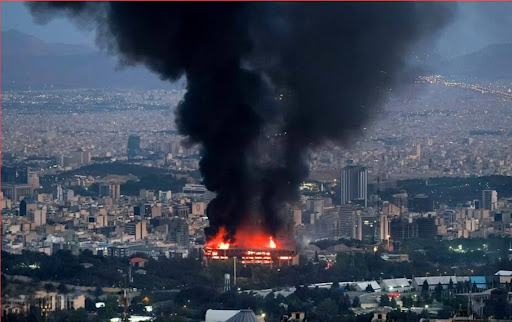
Global energy markets teetered on the edge of a major crisis on Saturday as the Iran-US conflict threatened to permanently damage the infrastructure through which a fifth of the world’s oil travels. Iran closed the Strait of Hormuz at the start of hostilities on February 28, and the closure had already sent oil prices soaring toward $120 per barrel. Analysts warned that further US strikes on Kharg Island — Iran’s main crude export terminal — could drive prices toward $150, a level that would inflict severe economic pain worldwide.
US warplanes bombed Kharg Island on Friday and again on Saturday, with President Trump claiming in public statements that the facility had been effectively demolished. The island sits 15 miles off Iran’s coast and is the country’s principal gateway for oil exports. Trump simultaneously threatened to destroy Iran’s remaining oil infrastructure unless Tehran reopened the Strait of Hormuz, having previously said he was holding back out of “decency.” His statement that “many countries” would send warships to force the strait open was notable as the first public acknowledgment that the US might need multilateral help.
Iran retaliated across a wide front. Ballistic missiles struck the UAE, halting oil loading at Fujairah — a key global bunkering port — and triggering evacuation warnings near harbour areas. Iranian commanders also threatened to strike any economic or energy installation in the region with ties to American businesses. The country’s foreign minister demanded Arab states remove US forces from their soil, framing the conflict as a war of foreign aggression against Iranian sovereignty.
The broader conflict continued to be devastating. At least 15 people were killed in an Israeli strike on a factory in Isfahan, Iran. More than 1,400 Iranians had reportedly died since the bombing began. Thirteen people had been killed in Israel, and roughly 20 across the Gulf region. Six US service members died when a military refuelling aircraft went down in western Iraq. The US embassy in Baghdad was struck by missiles overnight, prompting an immediate directive for Americans to leave Iraq.
Analysts suggested that Iran’s strategy was to survive, maintain enough military capacity to keep fighting, and drag the conflict out until a deal could be struck on its terms. At the International Crisis Group, Iran expert Ali Vaez described a three-part strategy of survival, sustained retaliation, and prolonged conflict. Trump showed no interest in a deal, telling reporters the terms were not good enough. With Lebanon also suffering — more than 800 dead and 850,000 displaced from Israeli strikes on Hezbollah — the region faced its most dangerous moment in decades.