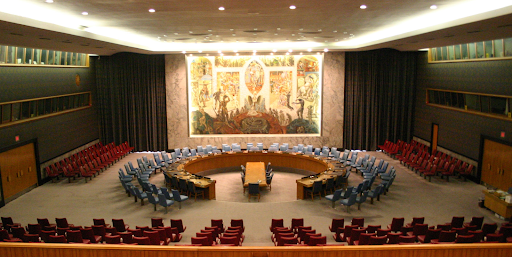
Russian Ambassador Vasily Nebenzya delivered a scathing critique of the UN Security Council’s decision to adopt a US-drafted resolution on Gaza, accusing the council of “giving complete control” to a US-led initiative. Although Russia abstained from the vote, allowing the resolution endorsing President Donald Trump’s peace plan to pass, Nebenzya warned that the council was “giving its blessing to a U.S. initiative on the basis of Washington’s promises.” He stressed that the UN was being sidelined in favor of new bodies with unknown “modalities.”
The resolution, adopted on Monday, authorizes a “Board of Peace,” chaired by Trump, to act as a transitional authority for Gaza’s reconstruction, and an “international stabilization force” (ISF) to demilitarize the enclave. Nebenzya, whose complaints were echoed by the abstaining Chinese ambassador, specifically pointed to the lack of a clear role for the United Nations in this new framework. He expressed concern over ceding power to the Board of Peace and the ISF, which will be responsible for decommissioning weapons and destroying military infrastructure.
The US, however, celebrated the vote as a significant diplomatic achievement. US Ambassador Mike Waltz championed the 20-point plan, which is included as an annex to the resolution, as a “possible pathway for Palestinian self-determination.” He argued that the resolution “dismantles Hamas’ grip” and ensures Gaza will be “free from terror’s shadow.” President Trump called the moment “historic” and promised further announcements about the board’s members in the coming weeks.
The plan faces immediate and formidable challenges on the ground. Hamas, the group that would be disarmed by the ISF, issued a statement condemning the resolution. It called the plan an “international guardianship mechanism” and vowed it “will not disarm,” re-asserting its right to “legitimate resistance.” This sets up a direct confrontation with the newly mandated international force.
In a rare sign of alignment with the US, the Palestinian Authority welcomed the resolution and stated its readiness to participate in its implementation. Diplomats suggest this endorsement was critical in convincing Russia not to use its veto. Despite this, the plan remains controversial for US allies as well. The resolution’s mention of a “pathway to… statehood” for Palestinians has drawn public opposition from Israeli Prime Minister Benjamin Netanyahu, illustrating the complex and contradictory pressures facing the new initiative.