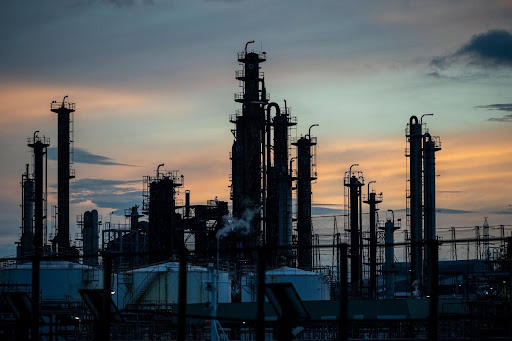
Oil prices breached $100 a barrel again Thursday as Iranian forces carried out strikes on fuel tanks, merchant ships, and export terminals across multiple Middle Eastern nations. The attacks demonstrated Iran’s willingness and capacity to disrupt the region’s energy infrastructure as part of its response to US and Israeli military pressure. International efforts to calm markets fell short as violence intensified.
Among the targeted locations were fuel storage facilities in Bahrain’s Muharraq Governorate, where authorities urged residents to stay home. Iraq shut down oil export operations entirely after tankers near its ports came under attack. Oman’s Mina Al Fahal terminal — one of the few remaining functional crude export points in the region — was emptied of vessels following drone strikes at a nearby port.
Brent crude gained as much as 9% to touch $100.29 a barrel before easing slightly. WTI rose 8.6% to $94.75 per barrel, approaching the psychologically important $100 level as well. Both benchmarks have climbed dramatically from roughly $60 a barrel at the start of 2026 as the conflict unfolded.
The IEA’s historic release of 400 million barrels of emergency crude from its 32 member nations was announced Wednesday but did not prevent Thursday’s price spike. The United States separately announced a 172-million-barrel release from its Strategic Petroleum Reserve. US energy officials estimated that deliveries would commence within a week and be completed over the course of about 120 days.
Goldman Sachs now forecasts Brent at $71 a barrel in Q4 2026, up from an earlier estimate of $66. Deutsche Bank flagged the risk of a broad stagflationary shock. Asian stock markets declined, with Japan’s Nikkei shedding 1.6% and South Korea’s Kospi falling 1.2%, while European gas prices added 7.7%.