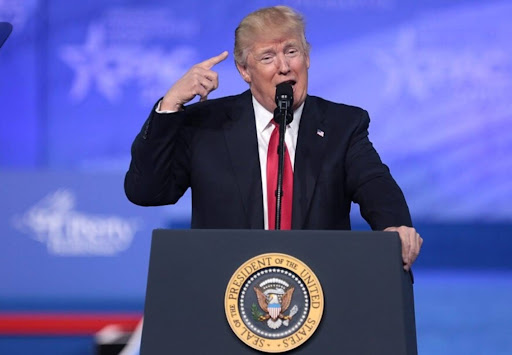
President Trump deployed some of his most forceful language yet to describe Iran on Thursday, calling the country an “evil Empire” in a Truth Social post that also dismissed concerns about soaring oil prices as secondary to the nuclear threat posed by Tehran. The post came as global oil markets faced what the International Energy Agency termed the largest supply disruption ever recorded. Trump’s framing of the conflict as an existential nuclear mission rather than an economic confrontation has significant implications for how long and how aggressively the United States intends to prosecute the war.
Gulf producers have slashed output by approximately 10 million barrels per day amid the ongoing conflict — close to 10% of global demand. Brent crude rose as much as 10% Thursday to briefly exceed $100 per barrel, while West Texas Intermediate climbed toward $96. The IEA announced the coordinated emergency release of 400 million barrels of oil reserves from its member nations, and the United States separately committed 172 million barrels from its Strategic Petroleum Reserve.
Trump acknowledged on Truth Social that elevated oil prices generate substantial revenue for America, given its status as the world’s largest crude producer. However, he stated that this financial consideration pales beside the importance of preventing Iran from obtaining nuclear weapons. He pledged categorically that he would never allow Tehran to cross that threshold, using language that suggested a readiness to sustain military operations indefinitely.
The use of “evil Empire” — a phrase historically associated with Cold War rhetoric — signals the depth of Trump’s antagonism toward the Iranian government and his determination to frame the conflict in moral rather than geopolitical terms. This language may energize domestic supporters while complicating relations with allies who prefer diplomatic engagement with Tehran. The president’s mixed signals about the war’s progress continue to create uncertainty.
Outside the White House Wednesday, Trump told reporters that the US had delivered unprecedented military punishment to Iran and was not finished. Earlier, he had suggested the conflict might be ending soon. These contradictory messages have unsettled markets and left foreign governments struggling to anticipate Washington’s next move.