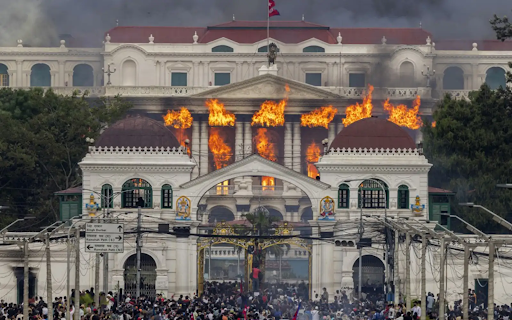
An attempt by the Nepalese government to impose censorship by banning popular social media platforms has backfired catastrophically, igniting the nation’s worst civil unrest in decades. The move, intended to curb online dissent, instead provoked a massive youth-led rebellion that resulted in 19 deaths, the resignation of the Prime Minister, and a humiliating policy reversal.
The government’s bill to regulate social media, requiring platforms to register and submit to local oversight, was widely criticized by rights groups as a blatant tool for silencing opposition. For Nepal’s Gen Z, this was an attack on their fundamental right to expression. They took to the streets in protest, but were met with deadly force from security services, a response that turned localized demonstrations into a national crisis.
The underlying cause of the explosive public reaction runs much deeper than the ban itself. It tapped into a vast reservoir of public anger over endemic corruption and nepotism. The protesters’ rage had been fueled by online exposés of the opulent lifestyles of the political elite, which contrasted sharply with the struggles of ordinary citizens, particularly the 20% of young people who are unemployed.
Although the government has now capitulated by removing the ban and replacing the Prime Minister, the damage has been done. The violent crackdown has shattered any remaining trust between the state and its young citizens. Protesters now feel that the entire system is rotten and are demanding its complete dissolution, leaving the future of Nepal’s governance in a state of profound uncertainty.