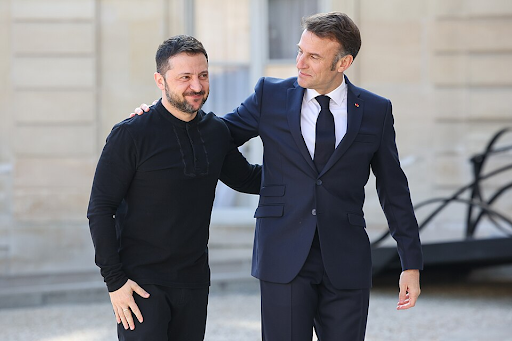
A landmark 10-year defense pact between Ukraine and France includes a groundbreaking agreement for joint industrial projects, including the co-production of interceptor drones. This was announced by President Volodymyr Zelensky during a historic visit to Paris, where he also signed a letter of intent to acquire 100 Rafale jets and other defense systems. This move toward joint production signals a deeper level of cooperation, aimed at building up Ukraine’s domestic defense industry.
The agreement to work together on developing and producing new drone technology is a strategic victory for Kyiv. It represents a shift from simply being a recipient of aid to becoming a manufacturing partner, enhancing Ukraine’s technological base and long-term military self-sufficiency. This cooperation is a key pillar of the “historical” 10-year framework, designed to cement the security relationship between the two nations.
This industrial cooperation is part of a much larger defense package. The preliminary deal is headlined by Ukraine’s plan to buy as many as 100 Dassault Aviation-produced Rafale fighter jets. The agreement also includes the purchase of advanced air defense systems, such as the highly-praised SAMP/T, of which Kyiv is set to receive eight units. Radars and other unmanned aerial vehicles are also part of the comprehensive pact.
These systems are desperately needed to defend against Russia’s escalating air attacks. Moscow has relentlessly pounded Ukrainian cities and infrastructure with missiles, glide bombs, and drones, causing civilian casualties and threatening the energy grid. President Zelensky’s diplomatic efforts have been laser-focused on acquiring the tools to stop this aerial barrage, and this French deal is a direct result.
Financing for the decade-long agreement will come from European sources, a necessity since the Trump administration halted US aid. The French presidency confirmed that the EU’s €150 billion SAFE loan fund will be tapped, and Zelensky added that Ukraine would utilize a G7 mechanism providing resources backed by future revenues from frozen Russian assets to fund the new hardware.