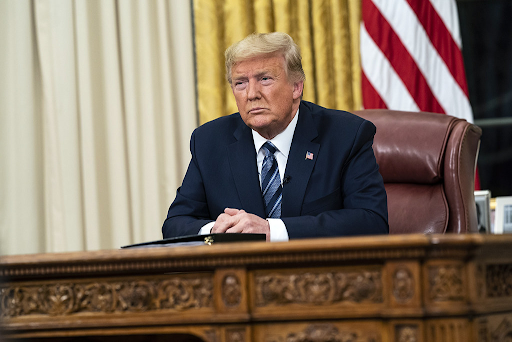
Donald Trump has dealt a significant blow to the Israeli far-right by unequivocally stating he will “not allow” the annexation of the West Bank. The president’s comments from the Oval Office serve as a direct rebuke to hardline members of Prime Minister Benjamin Netanyahu’s coalition, who have been pushing to extend Israeli law over the territory and crush Palestinian hopes for statehood.
Netanyahu, who was arriving for a UN speech in New York as the news broke, now faces a complex political dilemma. He must navigate the demands of his ultra-nationalist allies, who see annexation as a top priority, while contending with the clear opposition of his most powerful international backer. His office has so far remained silent, promising a response after his return to Israel.
Trump’s decision was heavily influenced by a strategic lobbying campaign from international partners. European allies, who had recently recognized Palestine, were concerned Trump would retaliate by recognizing Israeli settlements. Concurrently, Arab and Muslim countries warned of the “grave consequences” of annexation, a message that Saudi officials confirmed Trump had received and understood.
The issue of annexation is inextricably linked to the 700,000 Israeli settlers living in the West Bank and East Jerusalem. These settlements, which are illegal under international law, have fragmented the land and created significant obstacles to a viable Palestinian state. The approval of the E1 settlement plan in August further escalated tensions, as it is designed to cut the West Bank in two.
This major policy statement is also part of a wider US strategy focused on the Gaza conflict. The White House has circulated a 21-point peace plan to key Middle Eastern nations in an effort to end the nearly two-year war. Trump spoke optimistically about the potential for a breakthrough, emphasizing the goals of returning hostages and achieving regional peace against the backdrop of a conflict that has caused immense Palestinian suffering and famine.