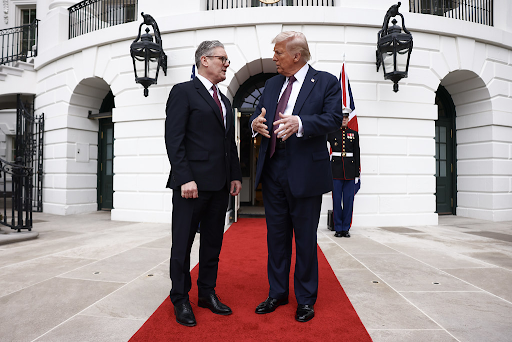
A fundamental disagreement over Middle East policy surfaced during President Donald Trump’s UK state visit, as he and Prime Minister Keir Starmer offered differing views on the recognition of a Palestinian state. Trump was unequivocal, telling reporters, “I have a disagreement with the Prime Minister on that score,” a rare public admission of a policy clash.
The timing is critical, as Britain is reportedly on the verge of recognizing Palestine in response to the ongoing conflict in Gaza and the lack of a ceasefire commitment from Israel. The decision to delay the official announcement until Trump’s departure underscores the UK’s desire to assert its policy without triggering an immediate diplomatic row with Washington.
Prime Minister Starmer sought to frame the issue in the context of a shared goal for peace, stating he and Trump “absolutely agree” on the need for a roadmap out of the current crisis. For the UK, recognizing Palestine is a strategic move intended to make the prospect of a two-state solution more tangible and achievable, while explicitly rejecting any future role for Hamas.
This disagreement reflects a broader international divide. A recent UN General Assembly vote saw 142 nations endorse a two-state solution, with the United States among the small minority opposing the resolution. The Trump-Starmer exchange brings this global debate into sharp focus, highlighting the challenges of forging a unified Western approach to the conflict.